 comparison
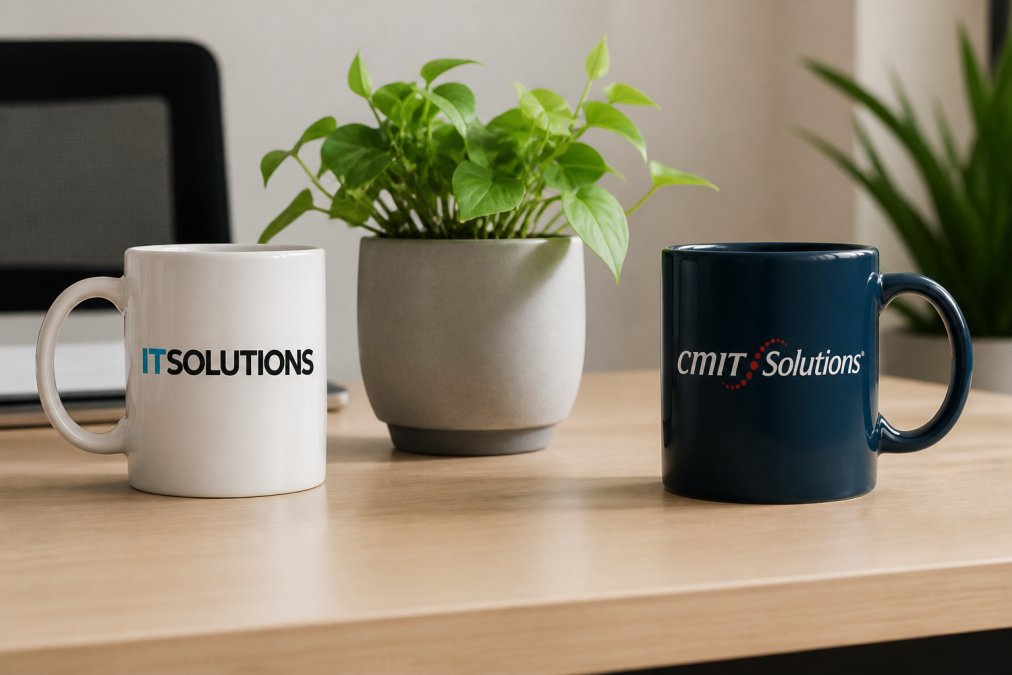
ITSolutions vs CMIT Solutions: 2026 Comparison
Table of Contents
- ITSolutions vs CMIT Solutions: Quick Comparison
- Service Offerings and Technical Capabilities
- Managed Security Providers: How They Differ
- MSP Pricing Models and Cost Structure
- Remote vs On-Site IT Support Options
- Franchise Model vs Independent Operations
- Which Provider Fits Your Business Needs
- Making the Transition
- Frequently Asked Questions
Last Updated: September 3, 2026
ITSolutions vs CMIT Solutions: Quick Comparison
The managed IT services market is experiencing explosive growth, with the U.S. IT managed services market valued at $71.14 billion in 2026 and projected to reach $119.92 billion by 2031, according to CloudSecureTech's MSP market analysis. As businesses increasingly turn to outsourced technical support to manage their infrastructure, choosing between ITSolutions and CMIT Solutions has become a critical decision for companies seeking reliable managed security providers and operational continuity.
This comparison breaks down how these two platforms differ in service offerings, pricing models, and support structures. Both claim to serve businesses of all sizes, but their approaches to remote management, infrastructure support, and customer relationships reveal significant differences that matter when you're evaluating a managed services provider for your organization.
At Nazca Tech, we've spent over 21 years helping businesses navigate complex IT decisions. This guide cuts through the marketing claims to show you exactly where each provider excels and where it falls short.
Service Offerings and Technical Capabilities
CMIT Solutions positions itself as a comprehensive managed services provider with expertise in help desk operations, network administration, cloud migration, and disaster recovery planning. The franchise model means each location operates independently, which creates both advantages and limitations.
ITSolutions emphasizes cloud-based infrastructure management and remote support capabilities, with a focus on scalability for growing businesses. Their technical stack centers on cloud-native solutions and automated monitoring systems.
The key difference emerges in specialization. Mordor Intelligence's managed services market research shows that managed security services are expanding at a 12.13% CAGR through 2031, and this is where service differentiation matters most. CMIT Solutions offers cybersecurity compliance as part of their broader service portfolio, while ITSolutions appears to integrate security as a component of their cloud management offerings.
For businesses requiring industry-specific expertise, particularly healthcare practices needing HIPAA-compliant infrastructure, this distinction becomes critical. Nazca Tech's approach mirrors the market trend toward specialized, vertical-focused managed services.
CMIT Solutions' franchise structure means your local office handles implementation, but service quality varies significantly by location. Some franchises excel at technical delivery; others struggle with communication.
Managed Security Providers: How They Differ
Managed security services have become the fastest-growing segment of the MSP market, expanding at 18% annually through 2026, according to DeskDay PSA's 2026 managed services trends. This growth reflects increasing regulatory pressure and the rising cost of security breaches.
CMIT Solutions includes security services in their managed services packages, covering compliance monitoring, endpoint protection, and threat detection. However, because they operate as independent franchises, the depth and sophistication of their security offerings depend on local expertise.
ITSolutions integrates security monitoring into their cloud management platform, emphasizing automated threat detection and response. Their approach relies more heavily on software-based security controls and continuous monitoring rather than on-site security assessments.
The real-world impact: CMIT's on-site presence allows them to conduct physical security audits and implement hardware-level protections. ITSolutions' remote-first model excels at detecting anomalies across distributed cloud environments but requires stronger internal IT practices from clients.
For healthcare practices and regulated industries, this matters enormously. A practice with legacy systems and limited IT staff may benefit from CMIT's hands-on security implementation. A cloud-native startup might find ITSolutions' automated security more efficient.
MSP Pricing Models and Cost Structure
The average cost for tiered managed IT services pricing ranges from $99 to $250 per user per month, according to 2025 managed IT services pricing research. This wide range reflects differences in service depth, local market rates, and included capabilities.
CMIT Solutions typically uses a tiered pricing model based on the number of users and devices under management. Because they operate as franchises, pricing varies by location.
ITSolutions generally offers standardized pricing across their service areas, which simplifies budgeting but may not account for local market conditions or your specific infrastructure complexity.
A real case study illustrates the cost impact: A manufacturing company with 50 employees reduced IT costs by 37% and achieved 99.9% system uptime after switching to a managed services model, stabilizing monthly IT costs at $7,500 from an average of $12,000 (BusinessWire, 2025). This demonstrates how predictable pricing under a managed services model beats reactive break-fix spending.
Hidden costs matter. Both providers may charge additional fees for:
- Emergency after-hours support
- Custom integrations or migrations
- Specialized compliance consulting
- Advanced security features
CMIT's franchise model sometimes creates pricing opacity, you may not know the final cost until after an on-site assessment. ITSolutions typically provides clearer upfront pricing, though custom requirements still trigger additional quotes.
| Pricing Factor | CMIT Solutions | ITSolutions |
|---|---|---|
| Model | Tiered, franchise-dependent | Tiered, standardized |
| Price Range | $99-$250+ per user/month | $99-$250+ per user/month |
| Transparency | Varies by location | Generally clear |
| Hidden Fees | Possible | Rare |
| Custom Work | Additional charges | Additional charges |
Remote vs On-Site IT Support Options
The support model you choose determines how quickly issues get resolved and how much control you maintain over your infrastructure.
CMIT Solutions emphasizes their local presence as a competitive advantage. With 300+ franchise locations, they can dispatch technicians for on-site visits, physical security assessments, and hardware installation. This matters for businesses with complex networking requirements or those uncomfortable with remote-only support.
ITSolutions operates primarily through remote management and monitoring. Their technicians connect to your systems remotely, diagnose issues, and implement fixes without traveling to your location. For distributed teams or cloud-native businesses, this model works efficiently.
The trade-off is real. On-site support provides hands-on troubleshooting for complex hardware issues and physical security implementation. Remote support scales better, responds faster to software and configuration problems, and costs less to deliver.
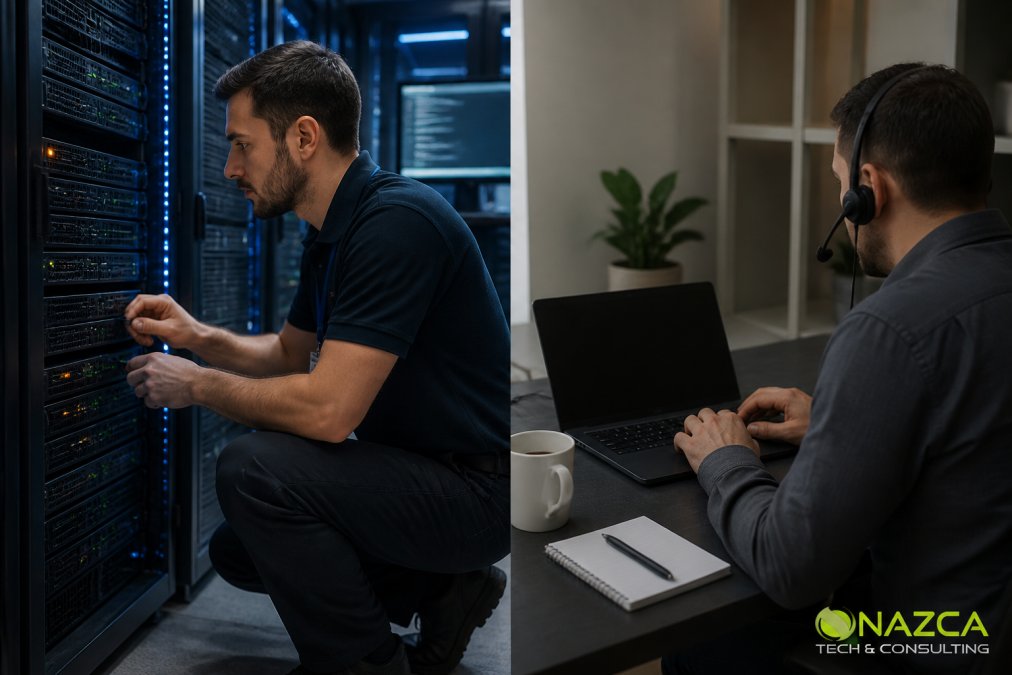
Nazca Tech's hybrid model, offering both rapid remote support (1 hour response time) and emergency on-site visits (3 hours for critical issues), reflects what the market increasingly demands. Businesses don't want to choose between speed and hands-on expertise; they want both.
CMIT's strength lies in serving businesses that value local relationships and need physical infrastructure work. Their weakness: slower response times for software issues because technicians must travel to your location.
ITSolutions' strength is speed and efficiency for cloud-based and software-focused problems. Their weakness: when you need someone physically present, they can't help.
Franchise Model vs Independent Operations
This structural difference shapes everything about how you'll experience each provider.
CMIT Solutions operates as a franchise system. You contract with a local franchisee who owns and operates their office. This creates several implications:
Advantages of the franchise model:
- Local decision-making and community relationships
- Technicians understand regional business practices
- Potential for personalized service at smaller franchises
- Physical presence for on-site support
Disadvantages of the franchise model:
- Inconsistent service quality across locations (reviews range from 5-star to 1-star)
- Limited ability to escalate to corporate if local service fails
- Pricing varies significantly by location
- Staff turnover at individual franchises affects continuity
ITSolutions operates as a centralized provider, meaning you contract directly with the company rather than an independent franchisee.
Advantages of centralized operations:
- Consistent service standards across all customers
- Unified pricing and contract terms
- Easier escalation paths for issues
- Standardized technical processes and documentation
- Predictable staff expertise levels
Disadvantages of centralized operations:
- Less local presence and community relationships
- May feel less personalized for smaller accounts
- Centralized decision-making can be slower for custom requests
- No local technician familiarity with regional infrastructure quirks
The research data shows that specialized MSPs (those focused on vertical markets) saw annual recurring revenue climb 11% in 2024 and achieve 30% higher profit margins. This suggests the industry is moving away from one-size-fits-all franchise models toward more specialized, centralized approaches, which favors ITSolutions' structure.
However, the franchise model's strength in local relationships shouldn't be dismissed. If you value knowing your support team and having someone physically present who understands your business, CMIT's model delivers that. If you prioritize consistency, scalability, and standardized processes, the centralized model wins.
Which Provider Fits Your Business Needs
Your choice depends on five specific factors:
1. Infrastructure Type Cloud-native businesses with minimal on-site hardware align better with ITSolutions' remote-first model. Businesses with significant on-site servers, networking equipment, or legacy systems benefit from CMIT's on-site capabilities.
2. Geographic Presence CMIT Solutions works best if you're in an area with an established franchise location and that location has strong reviews. ITSolutions provides consistent service regardless of location, though their service areas may be limited compared to CMIT's 300+ locations.
3. Support Response Requirements If you need on-site response within hours, verify CMIT's local franchise can meet that SLA. If remote support suffices, ITSolutions' faster response times to software issues matter more.
4. Regulatory Compliance Needs Healthcare practices, financial services firms, and other regulated industries need providers with deep compliance expertise. CMIT's on-site presence helps with physical security and compliance audits. ITSolutions' centralized approach may require additional compliance consulting.
5. Budget Constraints Small and mid-sized businesses account for 57.93% of managed services spending in the United States, and 72% of SMBs plan to increase managed IT spending by 2025. Both providers serve this segment, but CMIT's franchise pricing varies while ITSolutions offers more predictable costs.
ITSolutions is best for: Cloud-native companies, distributed teams, businesses seeking consistent service standards, organizations with primarily software-based infrastructure, and companies that value transparent, standardized pricing.
Making the Transition
Switching managed services providers requires careful planning. Both CMIT Solutions and ITSolutions will need to assess your current infrastructure, migrate monitoring and management tools, and establish new support workflows.
Key questions to ask before switching:
- What's the migration timeline and will there be service disruption?
- How will you transfer data from your current provider's monitoring systems?
- What training will your staff receive on new support processes?
- Are there contract termination penalties with your current provider?
- How will they handle the transition of vendor relationships and third-party integrations?
Small and midmarket businesses often underestimate migration complexity. A healthcare practice switching from one MSP to another must ensure HIPAA compliance throughout the transition, verify that patient data remains encrypted and secure, and maintain business continuity during the switchover.
Nazca Tech's experience shows that successful transitions require at least 4-6 weeks of planning and typically involve some temporary overlap between old and new providers to ensure zero downtime.
Choosing between ITSolutions and CMIT Solutions comes down to whether you prioritize local presence and hands-on support (CMIT) or consistent standards and remote efficiency (ITSolutions). The managed IT services market will continue expanding as more businesses recognize that outsourced technical support beats reactive break-fix spending.
If you're evaluating managed services providers, consider scheduling consultations with both to assess how well they understand your specific infrastructure and compliance requirements. The right provider should ask detailed questions about your systems, regulatory environment, and growth plans, not just quote a per-user-per-month rate.
Nazca Tech has spent over 21 years helping businesses like yours navigate these decisions. Our team of CCIE and SonicWALL engineers, combined with technicians trained in HIPAA compliance and ePHI security protocols, provides the hybrid support model that modern businesses need. We deliver rapid remote support within 1 hour and emergency on-site response within 3 hours, with a dedicated help-desk portal for real-time request tracking. If you're ready to move beyond the limitations of either franchise or purely centralized models, our personalized approach to managed IT services ensures your technology infrastructure supports your growth without unexpected costs or service gaps. Get started with Nazca Tech and gain the operational continuity and security confidence your business deserves.
Frequently Asked Questions
How do ITSolutions and CMIT Solutions differ in their MSP pricing models?
CMIT Solutions typically uses tiered pricing ranging from $99 to $250 per user per month, scaled to business size. ITSolutions pricing specifics are less publicly documented. Both operate on recurring revenue models, but CMIT's franchise structure means pricing varies by location. When comparing MSP pricing models, request detailed quotes from both providers to understand what's included in each tier, as service inclusions significantly impact total cost.
Is CMIT Solutions a legitimate managed services provider?
Yes, CMIT Solutions is a legitimate and established MSP with over 300 franchise locations across the United States. The company has demonstrated favorable service desk performance and customer satisfaction ratings. However, as a franchise network, service quality varies by location due to independent ownership. Some locations maintain 5-star ratings while others receive lower ratings, making local reviews important before committing.
Should I choose remote support or on-site IT support for my business?
Remote support works well for troubleshooting, software issues, and monitoring, offering faster response times and lower costs. On-site support is essential for hardware repairs, network infrastructure work, and complex issues requiring physical presence. The best approach combines both: remote-first for quick response, with on-site capability for emergencies. Consider your industry (healthcare practices need stronger on-site presence for compliance) and your team's technical capability when deciding.
What makes a managed security provider different from general IT support?
Managed security providers specialize in cybersecurity, threat detection, compliance, and data protection as core services. General IT support focuses on infrastructure, help desk operations, and system maintenance. Managed security providers expand at 12.13% annually through 2031, reflecting growing demand. If your business handles sensitive data (healthcare, financial records), a managed security provider should be part of your strategy, either as your primary MSP or as a specialized partner.
This article was written using GrandRanker